

Activity Report:Event Highlights
Signing of an MoU with the Philippine Chamber of Commerce and Industry /
Environmental Technology Exchange Session
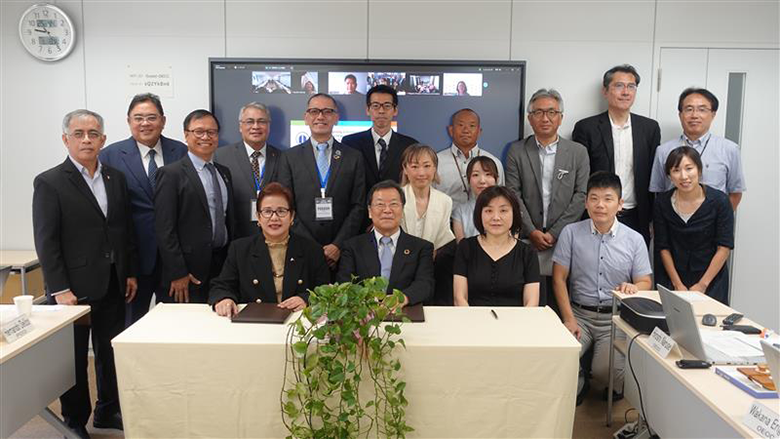
| Event | Signing of an MoU with the Philippine Chamber of Commerce and Industry for promoting the utilization of environmental solutions between Japan and the Philippines / Environmental Technology Exchange Session |
|---|---|
| Date/Time | July 8, 2025, from 9:00 AM to 10:30 AM |
| Event format | In-person (Tokyo) |
| Outline | A Memorandum of Understanding was signed between the PCCI and the OECC, which serves as JPRSI’s secretariat. The agreement outlines a partnership to promote environmental cooperation and realize a decarbonized society through JPRSI. A Japan-Philippines Environmental Technology Exchange Session was also held in response to the technological request with regard to environmental challenges in the Philippines. Four JPRSI member companies introduced their unique technologies regarding HTL (Hydrothermal Liquefaction Technology) and Methanation. A lively Q&A session followed, with active participation from both in-person attendees and online participants, including members of the PCCI's Environment and Climate Committee. |
| Reference | MoU (English) https://jprsi.go.jp/files/report/PCCI_JPRSI_MOU.pdf |
Signing of an MoU with the PCCI on Promoting the Utilization of Environmental Solutions
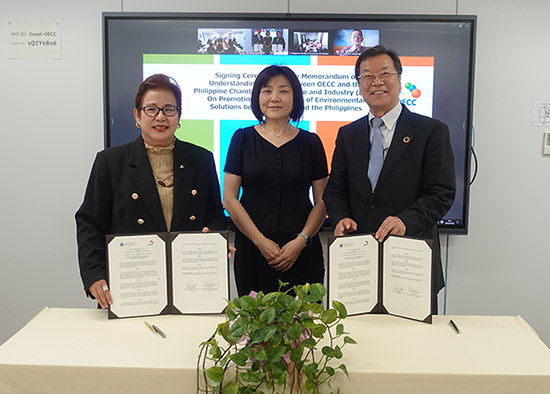
On July 8, 2025, a Memorandum of Understanding was signed between the Philippine Chamber of Commerce and Industry (PCCI) and the Overseas Environmental Cooperation Center, Japan (OECC), which serves as the JPRSI secretariat. The agreement outlines a partnership for environmental cooperation and the realization of a decarbonized society through JPRSI.
This MoU builds upon the achievements of the "2nd Philippines-Japan Environment Week" held in Manila this January, and will further accelerate public-private partnerships focused on promoting a circular economy, addressing climate change, and deploying environmental technologies.
Expectations for Japan-Philippines Environmental Cooperation
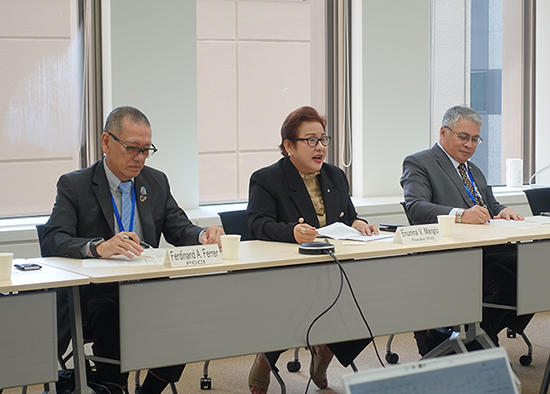
PCCI President, Ms. Enunina V. MANGIO, stated, "The signing of this memorandum of understanding is a strong sign of our shared commitment to fulfill our common responsibilities through environmental protection and sustainable business practices. Today's session is an important achievement built on the success of the 2nd Japan-Philippines Environment Week held in Manila this January." Regarding the technology exchange session, she expressed her hope that Japanese companies would present innovative environmental solutions to address the environmental challenges and technological needs faced by the Philippines. "Such sessions allow our discussions to focus on solutions, creating opportunities for substantial cooperation that balances environmental solutions with business growth. International cooperation and cutting-edge technology are essential for solving environmental challenges", she added.
 |
|---|
PCCI President |
 |
|---|
Signing Ceremony |
Japan-Philippines Environmental Technology Exchange Session
To promptly advance the implementation of the memorandum's objective—promoting the utilization of environmental solutions between Japan and the Philippines—a Japan-Philippines Environmental Technology Exchange Session was held following the signing ceremony. Based on the environmental challenges and technological needs of the Philippines, four JPRSI member companies participated in the session to showcase their advanced technologies.
Environmental challenges in the Philippines
We invited Mr. Bonar LAURETO from the PCCI's Environment and Climate Committee, who gave a presentation on the opportunities for introducing technologies such as waste-to-energy in the Philippines, with a focus on three key perspectives.ⅱ
1.Waste Generation and Challenges in the Philippines
The Philippines generates approximately 77,000 tons of solid waste daily, and wastewater from industries and households is a significant contributor to greenhouse gas emissions. While a waste management law was enacted 25 years ago, only about 30% of local government units currently have access to sanitary landfills. Illegal dumpsites are widespread across the country, and the operation of resource recovery facilities is limited, resulting in insufficient waste segregation and treatment.
2.Promising Technologies and Their Applicability
・Hydrothermal Liquefaction Technology (HTL): This technology can process a mixture of wet and dry waste, making it suitable for the current situation in the Philippines where waste segregation is difficult. It can produce fuel oil and methyl esters, among other outputs.
・Biodigester: This technology generates biogas from industrial wastewater. It has already been adopted by some companies, and further improvements in efficiency and cost reduction are expected.
3.Collaboration and Outlook for Technology Introduction
Providing technology from Japanese companies and collaborating with Philippine businesses can lead to practical solutions for these challenges. There is significant potential for introducing waste-to-energy technologies in sectors such as food processing, beverages, agriculture, and oil refining.
The goal is for OECC and PCCI to cooperate on building mechanisms for technology transfer and joint financing to address these nationwide issues.
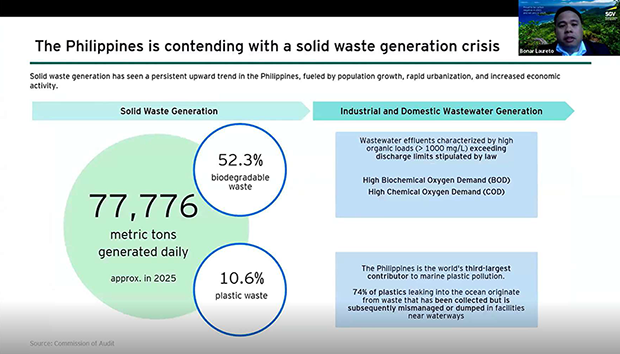
Challenges in Waste Management in the Philippines,
presented by Mr. Bonar LAURETO, PCCI Environment and Climate Committee
Technology Presentations by JPRSI Member Companies and Q&A Session
In response to the needs and expectations of the Philippines, four JPRSI member companies presented their environmental technologies. The session featured active engagement, with questions and comments from the PCCI delegation and detailed technical inquiries from members of the PCCI Environment and Climate Committee participating online, paving the way for future collaboration.
<List of Presenting JPRSI Member Companies>
BIOTECHWORKS-H2 Co., Ltd. – Hydrogen generation via gasification
 |
|---|
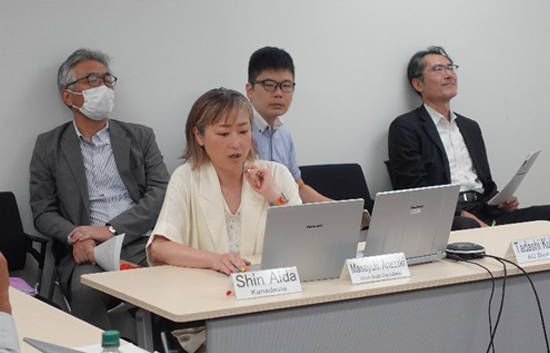
Presentation by BIOTECHWORKS-H2 Co., Ltd. |
In its presentation titled “Turning Waste into Clean Hydrogen: A Smarter Solution”, BIOTECHWORKS-H2 Co., Ltd. introduced its innovative business model for converting various types of organic waste into renewable energy by extracting hydrogen from syngas. Unlike conventional gasification systems that typically process only a single type of waste, their proprietary blending and pre-treatment method enables the efficient handling of diverse waste streams, optimizing hydrogen yield. This process also generates salable by-products such as CO2 and slag, contributing to a profitable, zero-waste circular economy.
AC Biode – Chemical recycling / Compact biogas system
 |
|---|
Presentation by AC Biode |
AC Biode showcased two innovative waste management technologies: PLASTALYST and compact biogas system. PLASTALYST is a catalytic chemical recycling technology that breaks down a wide range of waste including organic materials and mixed or multilayer plastics at a low temperature of 200°C, producing useful biochemicals without locally emitting CO2. Compact biogas system is a container-sized on-site system for digesting organic waste into biogas, which can be used to generate electricity and heat, offering a payback period of 3 to 8 years.
Nihon Suido Consultants Co., Ltd. – Biogas generation from wastewater
 |
|---|
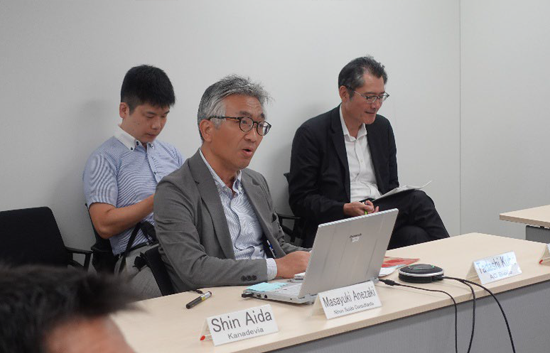
Presentation by Nihon Suido Consultants Co., Ltd. |
Nihon Suido Consultants Co., Ltd. presented its “RABIT” (Rapid Anaerobic Bio-gas Transition) system, an anaerobic wastewater treatment technology that processes high-strength organic wastewater containing fats, oils, and grease (FOG) to generate bioenergy. The system uses ultrasonic devices to break down stubborn substances like grease and oil, improving digestion efficiency. Methane recovered from the process can power facility operations. The company also presented an example of the system’s greenhouse gas reduction impact, suggesting such efforts may enhance corporate environmental value.
Kanadevia Corporation – Integrated waste treatment with biogas technologies
 |
|---|
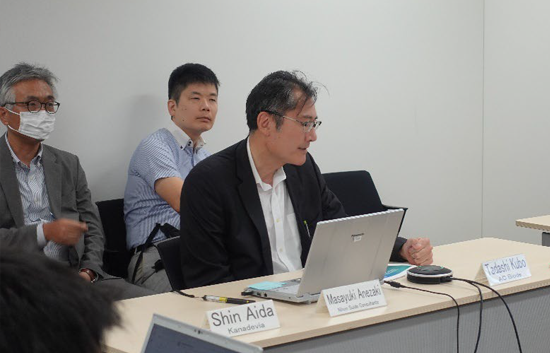
Presentation by Kanadevia Corporation |
Kanadavia, formerly known as Hitachi Zosen, gave a presentation titled “Achieving Circular Economy through Diverse Waste Management & Wet Biogas Technology.” The company emphasized its long-standing expertise in the field, with over 1,500 facilities operating worldwide. A new branch was recently established in Manila. The presentation featured an integrated waste management facility combining energy recovery with material recovery and methane fermentation (Waste-to-X) and highlighted their biogas technologies—both dry and wet systems—that flexibly produce electricity or biomethane from food waste.
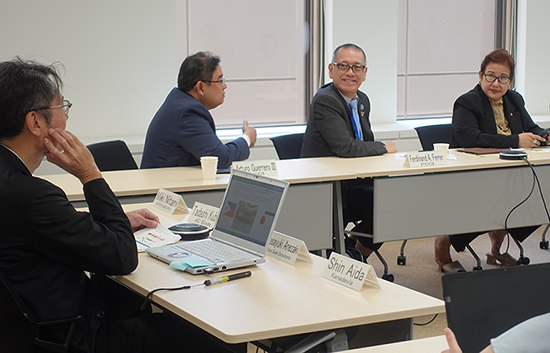 |
|---|
A lively Q&A session in progress |
The signing of the memorandum and the technology exchange session marked a key step in formalizing ties with the PCCI, first established during the Environment Week. Building on this, continued collaboration between the PCCI and JPRSI aims to connect the Philippines’ environmental needs with Japan’s technological solutions, opening up new opportunities for sustainable business and environmental protection. Looking ahead, we plan to identify technology needs in the Philippines through the PCCI and host seminars and business matching events.
ⅰ Director for International Cooperation for Transition to Decarbonization and Sustainable
Infrastructure, Global Environment Bureau, MOEJ
ⅱ Mr. Bonar LAURETO also gave a presentation at the Climate Change Mitigation/JCM Session during the 2nd Japan-Philippines Environment Week.
For details on the Environment Week program, please see: https://jprsi.go.jp/ew2025ph/en/event