
Regional Resource Circulation Model Realized through Agriculture-Industry Collaboration

Technology / Service Summary
Toward a carbon-neutral society, we, DAIHATSU, present our regional resource circulation model, in which agriculture, industry, and local government collaborate to circulate energy, resources, and economic value within the region.
This model based on Nature-based Solutions contributes to carbon neutrality by utilizing renewable energy, reducing fossil fuel consumption, and minimizing waste.
Purpose
To realize a carbon-neutral society by circulating energy, resources, and economic value locally through collaboration among agriculture, industry, and local government.
Feature
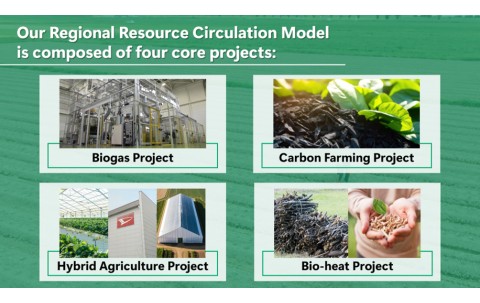
- The Regional Resource Circulation Model consists of four core projects: Biogas, Carbon Farming (Biochar), Hybrid Agriculture, and Bio-heat.
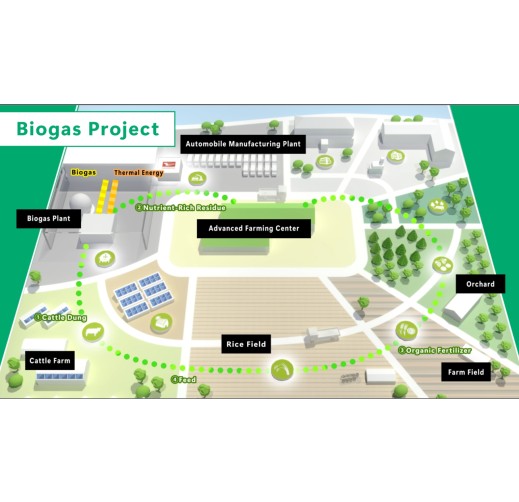
- It utilizes local biomass (such as cattle dung, rice husks, pruned branches, and bamboo) to produce renewable energy, organic fertilizer, and heat.
- The system is based on teamwork among farmers, manufacturers, and local authorities, creating a self-sustaining cycle of resources and energy.
Effect
- Supports industrial decarbonization, agricultural development, and community activation.
- Reduces fossil fuel consumption and waste, while generating environmental and economic value.
- Provides a replicable blueprint that can be adapted for communities worldwide.
Controlled Substance
Applicable Regions / Countries
- Japan
- Southeast Asia
- Central/South Asia
- China/ East Asia
- Middle East
- Africa
- Oceania
- North America
- Europe
- Central/South America
- ASEAN countries
Indonesia,Cambodia,Singapore,Thailand,Philippines,Brunei Darussalam,Viet Nam,Malaysia,Myanmar,Lao PDR
Related SDGs Goals
- 17. Partnerships to achieve the Goal
Youtube Videos